
Aprilia
| Manufacturer | Aprilia S.p.A. |
|---|---|
| Country of origin | Italy |
| First created | 1960s (as a brand) |
| Original use | Motorcycle manufacturing |
| Product categories | Motorcycles, scooters, sportbikes, motocross bikes |
| Engine configuration | Primarily V-twin and single-cylinder |
| Notable racing discipline | Grand Prix motorcycle racing (MotoGP) |
Origin and history
Aprilia is an Italian motorcycle manufacturer originating from the country's northern region, specifically founded in the province of Venice. The company's origins trace back to the mid-20th century, beginning as a manufacturer of bicycles in the late 1940s before transitioning to motorized two-wheelers. Its evolution into a significant motorcycle producer gained momentum through the 1960s and 1970s with the production of small-displacement mopeds and motorcycles. The brand established its competitive pedigree early by participating in off-road racing, which informed its production models. A pivotal moment in its history was its acquisition by the Piaggio Group in the early 2000s, securing its financial and industrial future. This Italian heritage is central to Aprilia's identity, blending design flair with a deep-rooted racing ethos.
What it is designed for
Aprilia designs motorcycles with a core focus on performance, advanced engineering, and a distinct sporting character across multiple riding disciplines. The brand's street models, particularly its sportbikes, are engineered for precise, aggressive road riding and track-day use, prioritizing sharp handling and high-revving power. Its adventure-touring models are built for long-distance capability on both paved and unpaved surfaces, balancing comfort with off-road poise. Aprilia also produces naked bikes and supermotos designed for dynamic urban and backroad riding, emphasizing torque and agility. Underpinning all these categories is a consistent application of technology derived directly from the company's extensive Grand Prix and World Superbike racing programs. This results in machines that are fundamentally designed for engaged riders who prioritize technical innovation and tactile feedback.
Development and versions
Aprilia's development is characterized by model lineages that evolve through distinct generations, each incorporating significant technological leaps. The RSV4 superbike platform, for example, has progressed through multiple iterations since its late-2000s introduction, continually refining its engine architecture, electronics suite, and aerodynamics. Similarly, the Tuono model evolved from a naked derivative of the RSV Mille into a distinct platform with its own powerful V4 engine and sophisticated rider aids. The adventure segment is served by the Caponord and more recently the Tuareg, with the latter representing a modern interpretation of the rally-focused enduro. Development often sees race-bred components, such as aluminum frames and radial braking systems, trickle down to middleweight models like the RS 660. This continuous refinement ensures that even standard production models benefit directly from Aprilia's relentless competition efforts.
Aprilia price
Aprilia motorcycles are positioned in the premium segment of the market, reflecting their advanced components, performance engineering, and Italian provenance. Entry-level models like the RS 660 and Tuono 660 occupy a mid-range price point, offering a gateway to Aprilia's technology at a more accessible level. Adventure models like the Tuareg are priced competitively within the middleweight adventure bike category, offering specialized hardware for off-road travel. It is important for buyers to factor in that ownership costs, including insurance, maintenance, and proprietary parts, align with the motorcycle's premium positioning. Pricing strategy consistently reflects the brand's focus on delivering high-specification machinery rather than competing on cost alone.
Aprilia specs
Specifications for Aprilia motorcycles highlight a strong emphasis on innovative engine design, premium chassis components, and comprehensive electronics. Many flagship models are powered by a unique 65-degree V4 engine configuration, chosen for its compact dimensions, high power output, and distinctive exhaust note. Chassis architecture typically employs lightweight aluminum twin-spar or perimeter frames, often with adjustable geometry for fine-tuning handling characteristics. Suspension components are frequently supplied by high-end manufacturers like Sachs or Öhlins, offering full adjustability. The electronic suite is a major spec highlight, encompassing multiple engine maps, traction control, wheelie control, launch control, cornering ABS, and up/down quickshifters. These systems are managed through sophisticated inertial measurement units (IMUs) that enable dynamic, lean-angle-sensitive intervention, representing some of the most advanced rider aids in production motorcycling.
Overview
Aprilia represents a distinct blend of Italian passion and technical precision, creating motorcycles that are both emotionally engaging and rationally competent. The brand's identity is inseparable from its racing successes, particularly in World Superbike and Grand Prix championships, which serve as a direct R&D pipeline. Across its range, from sportbikes to adventure tourers, there is a consistent thread of assertive styling, high-revving performance, and complex electronics. Ownership involves interacting with a machine that demands a certain level of rider involvement to fully exploit its capabilities. The overall package is designed for those who view riding as a skilled craft, offering tools that reward technical proficiency.
What to know
Prospective owners should know that Aprilia motorcycles are technically complex machines with electronics and engine management systems that require familiarity to properly configure and utilize. The service network, while part of the larger Piaggio Group, can be less densely distributed than some Japanese rivals, making specialist support a consideration for some buyers. Parts availability for less common models or older generations may involve longer wait times compared to high-volume manufacturers. The riding position and ergonomics on sport-oriented models are typically committed and aggressive, prioritizing control over long-distance comfort. The character of engines, especially the V4, is highly strung and delivers peak power at high rpm, which shapes the riding style required to access performance. Understanding these operational and ownership parameters is crucial to a satisfying experience with the brand.
Common questions
A common question is how Aprilia models compare directly to Japanese competitors, with the answer typically focusing on a more specialized, race-influenced character versus broader usability. Many riders ask about the reliability of modern Aprilias, which has improved significantly since the Piaggio acquisition, though complex systems still demand meticulous maintenance. Prospective buyers frequently inquire about the real-world fuel range of models like the RSV4, which is often limited due to high performance and smaller fuel tank capacities focused on weight savings. There is regular discussion about the learning curve associated with the extensive electronics suite and how to best calibrate it for street versus track use. Questions also arise regarding the suitability of models like the Tuareg for serious off-road travel compared to established adventure specialists. The topic of engine heat management, particularly on V4 models in traffic, is another frequent point of rider inquiry.
Pros and cons
A significant pro is the exceptional level of handling precision and feedback provided by the chassis and suspension, giving expert riders a distinct tool for exploring limits. The proprietary V4 engine delivers a thrilling, high-rpm power band and an addictive soundtrack that is unique in its class. The sophistication and adjustability of the electronic rider aids are top-tier, allowing for fine-tuning of the motorcycle's character to suit conditions or skill level. A primary con is that this complexity can be daunting for some, and the interface for adjusting settings is not always intuitively designed, leading to frustration. Some riders regret choosing an Aprilia for daily commuting or casual touring, as the focused ergonomics and engine characteristics can be fatiguing when not being used aggressively. The common mistake is purchasing one for its prestige or specs without the intention to engage deeply with its performance nature, leading to an unused and expensive machine.
Who it suits
Aprilia motorcycles best suit the technically-minded rider who views operating a motorcycle as a craft to be honed, not just a means of transportation. They are ideal for experienced riders who can appreciate and utilize the nuances of high-end suspension, brakes, and electronic controls, whether on road or track. The brand appeals to those who value distinct engineering character, such as the V4 engine layout, over the more ubiquitous inline-four configuration common in sport bikes. It is a strong match for riders within reasonable reach of a knowledgeable dealership or who are comfortable with a degree of hands-on maintenance and system management. Aprilia is less suited to the first-time buyer, the rider seeking maximum low-end torque and simplicity, or someone whose primary concern is minimizing cost of ownership and maximizing dealer convenience. Ultimately, it suits the enthusiast for whom emotional engagement and technical depth are primary purchase drivers.
Latest Aprilia news
Latest reporting
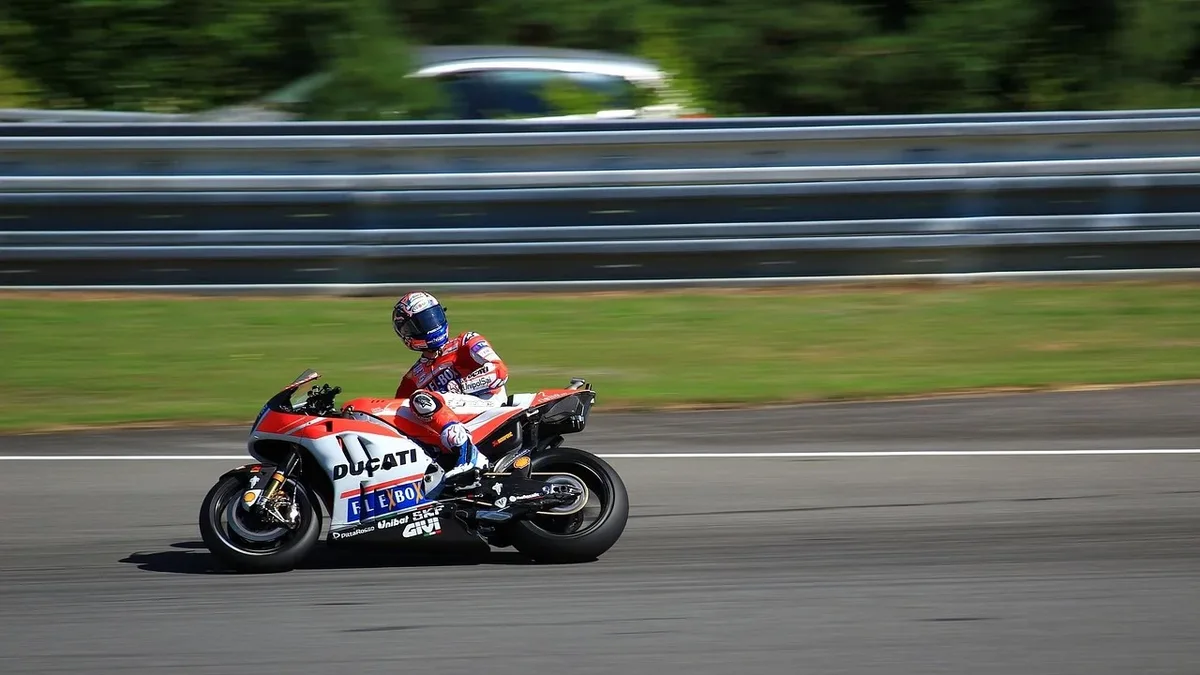
Di Giannantonio says Marquez form disproves
VR46 rider Fabio Di Giannantonio rejects the idea that MotoGP's 2026 title fight is dictated by circuits favouring either Ducati or Aprilia, arguing...
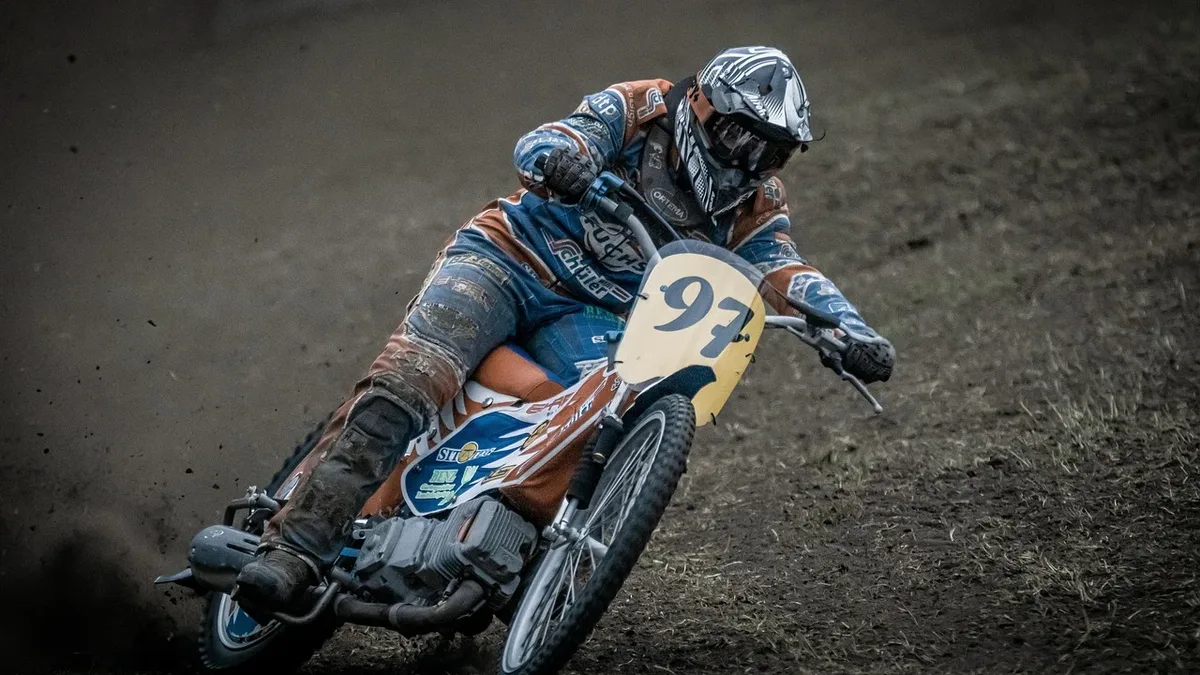
Marc Marquez credits rivals' errors for MotoGP title lead
Marc Marquez says mistakes by his MotoGP rivals, particularly Aprilia's Marco Bezzecchi and Jorge Martin, have been a 'sweet' present that helped him
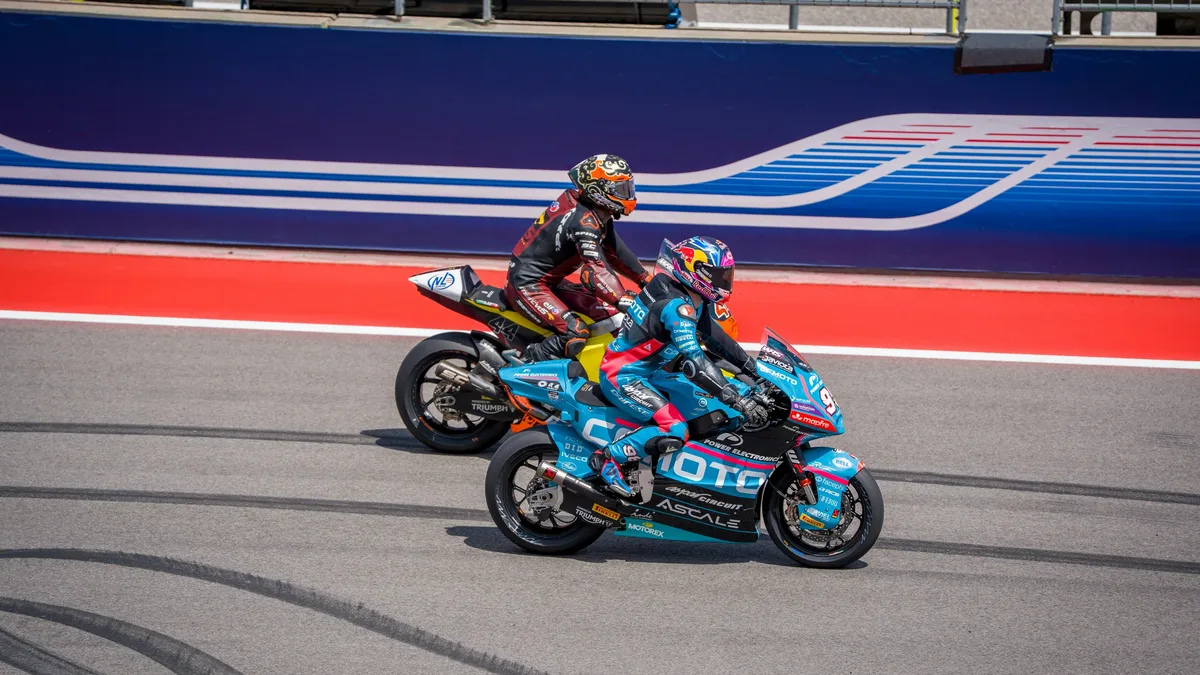
Bezzecchi Unfazed by Aprilia Teammates' Misano Practice
Marco Bezzecchi says he is not worried after topping Friday practice at Misano while his Aprilia teammates Jorge Martin and Raul Fernandez struggled...
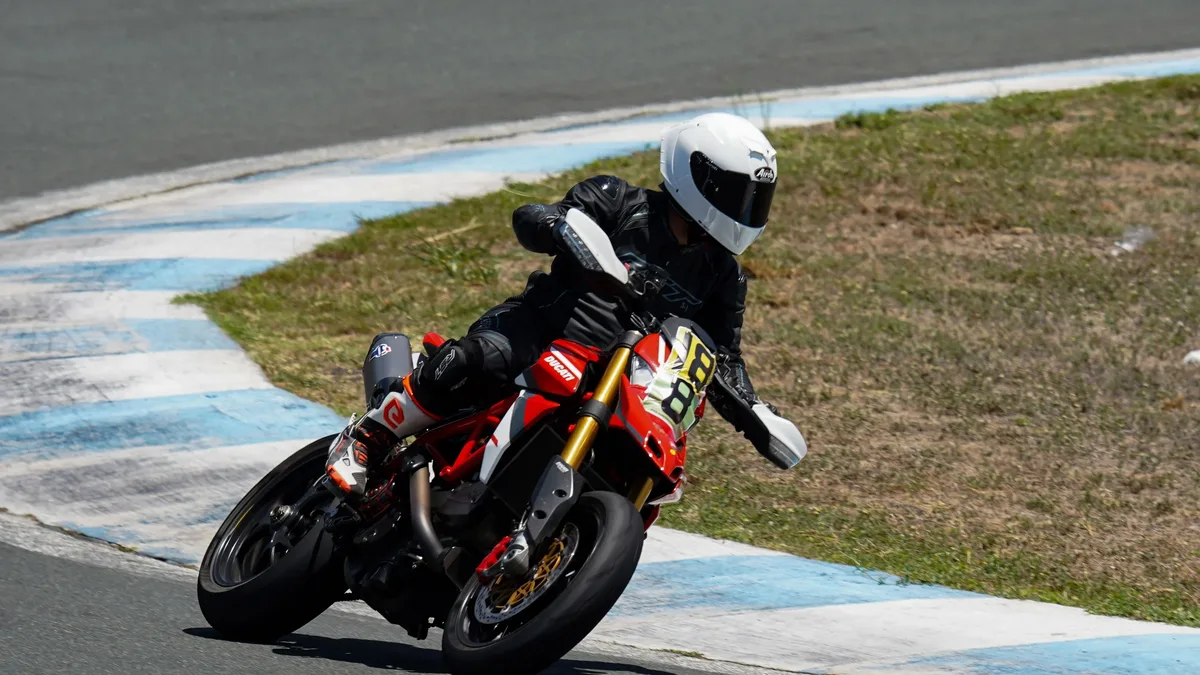
Aprilia CEO praises Marc Marquez's racing
Aprilia Racing CEO Massimo Rivola says his team can learn from Marc Marquez's intelligent approach as the Ducati rider closes the MotoGP points gap.
Marc Márquez wins Aragon MotoGP for Ducati
Marc Márquez won the MotoGP Grand Prix at MotorLand Aragón on Sunday, September 8, 2026. Pedro Acosta finished second for Red Bull KTM, with...