Marc Marquez
| Full name | Marc Márquez Alentà |
|---|---|
| First created | 1993 |
| Country of origin | Spain |
| Original use | Motorcycle road racing |
| Racing class | MotoGP |
| Racing number | 93 |
| Riding style | Aggressive, high-corner-speed |
Origin and history
Marc Marquez is a professional motorcycle racer from Cervera, a town in the Catalonia region of Spain. His emergence as a top-tier talent occurred in the first decade of the 21st century, marked by a rapid ascent through the grand prix racing classes. He first gained significant international attention by winning the 125cc World Championship in 2010. His move to the Moto2 class culminated in a world title in 2012, demonstrating a consistent pattern of adapting quickly to more powerful machinery. The historical context of his career is deeply intertwined with the Repsol Honda team, which he joined for his premier class debut in 2013. This partnership with a dominant manufacturer created the platform for one of the most successful opening acts in MotoGP history.
What it is designed for
Marc Marquez's riding style is fundamentally designed for maximizing corner speed and exploiting the absolute limit of front tire grip. The approach is engineered to carry immense momentum through the middle of a corner, allowing for devastating acceleration on exit. This method is in direct contrast to styles that prioritize late, hard braking and a point-and-squirt corner exit. The physical design of his technique relies on an aggressive, hanging-off body position that loads the front end and allows the bike to remain more upright. It is a holistic system intended to work in concert with a motorcycle that offers stable, predictable front-end feel and can support high cornering loads. Ultimately, the style is designed for relentless attack and for rewriting what is considered the possible lean angle and cornering speed on a MotoGP machine.
Development and versions
The development of Marc Marquez as a racer can be tracked through distinct phases aligned with his machinery and physical challenges. The initial version was the prodigy on the Honda RC213V, a bike whose characteristics, particularly a strong front end, complemented his aggressive style perfectly, leading to six premier class titles in seven years. A significant developmental fork occurred following a serious arm injury sustained in 2020, which necessitated a long period of adaptation and multiple surgical interventions. This period forced an evolution in his approach, as he worked to regain strength and refine his technique to compensate for physical limitations. The latest major version commenced with his seismic move to the Gresini Ducati team in 2024, marking a critical adaptation phase to the characteristics of the Desmosedici GP23, a bike with different strengths. Each phase represents a recalibration of the symbiotic relationship between his innate talent and the engineering package beneath him.
Pros and cons
The primary pro of Marquez's approach is its sheer speed when everything is synchronized; at its peak, it can deliver an unmatchable rhythm that demoralizes competitors and wins championships. This style can also extract performance from a motorcycle that other riders find difficult or intimidating to ride, finding grip where others perceive none. A significant con is the exceptionally high risk of injury inherent in constantly operating at the physical limit of adhesion, as a minor miscalculation often results in a high-side crash. This approach can also be brutally demanding on equipment, particularly front tires, and can exacerbate any inherent instability in a motorcycle's chassis. Riders who attempt to emulate this style without his preternatural feel for the front end often regret it, as the common mistake is overloading the tire past its capability, leading to frequent crashes. Furthermore, the style can struggle in conditions where front-end feel is compromised, such as in mixed weather or on tracks with poor grip, where a more conservative, rear-wheel-oriented technique may be more effective.
Who it suits
This riding craft suits only an exceptionally rare combination of athlete: one possessing otherworldly reflexes, a fearless mentality, and an almost tactile sense of front tire traction. It is ideally matched to a rider who thrives on constant aggression and can process the micro-feedback from a motorcycle at the very edge of control. The style is a natural fit for a development rider tasked with pushing a motorcycle's limits to find performance, as it immediately highlights a chassis's strengths and weaknesses. It does not suit a methodical, data-driven rider who prefers a calculable, repeatable margin of safety, as Marquez's method often operates in a realm beyond conventional data points. Furthermore, it is ill-suited for anyone without access to the highest level of medical and physical rehabilitation support, given the inevitable injuries that result from its application. Ultimately, it is a bespoke system for a generational talent, inextricably linked to the individual physiology and psychology of Marc Marquez himself.
Latest Marc Marquez news
Latest reporting
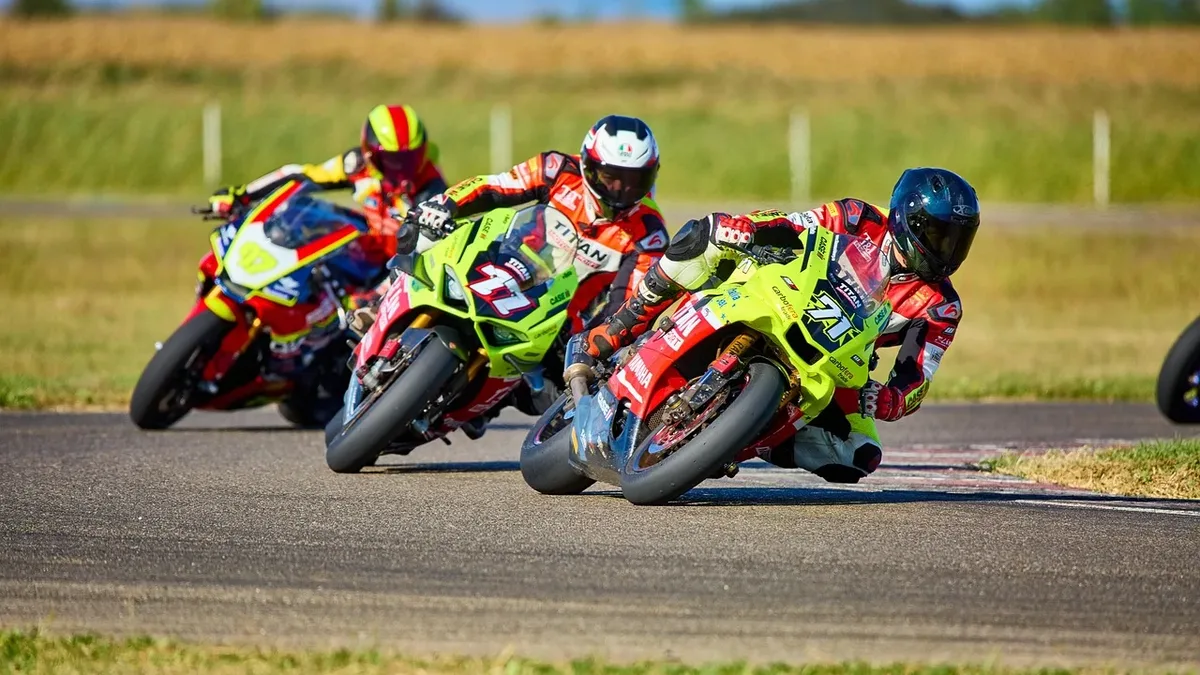
Marc Marquez's Sprint Dominance Defines 2024 MotoGP Title Race
Marc Marquez's unmatched performance in Saturday sprint races has built a decisive 74-point championship lead over Marco Bezzecchi, reshaping the...
Dovizioso Analyzes Marquez-Bezzecchi Qatar Sprint Clash
Andrea Dovizioso critiqued the risky Turn 1 contact between Marc Marquez and Marco Bezzecchi in the Qatar MotoGP Sprint, highlighting visibility...
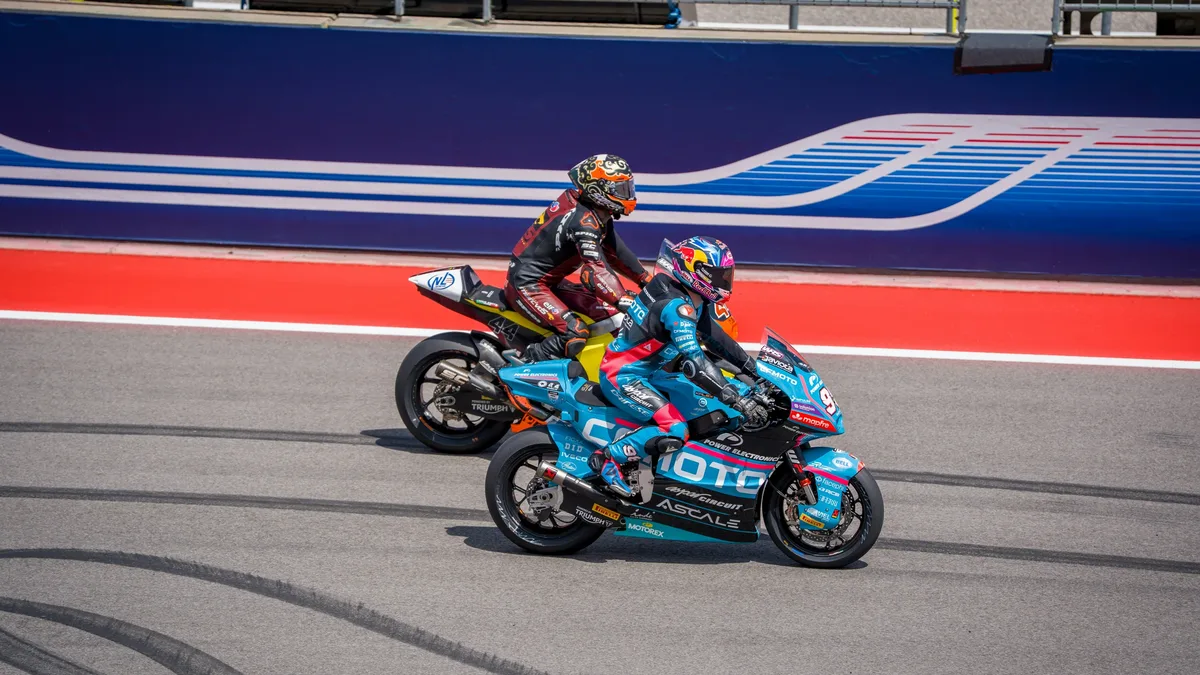
Bezzecchi Dominates Qatar MotoGP as Martin Battles Injury
Marco Bezzecchi delivered a commanding lights-to-flag victory for Aprilia in Qatar, while Jorge Martin's title hopes took a major hit as he raced...
Marquez Poised for 10th Title as Aprilia Challenges Ducati
Marc Marquez leads the MotoGP standings by 60 points with two races left, needing only to outscore Jorge Martin by two points to secure his eighth...
Valentino Rossi Delayed Daughter's Birth to Avoid Marquez Birthday
Valentino Rossi revealed he urged his partner to delay his daughter's birth by 24 hours to avoid sharing a birthday with rival Marc Marquez...
Valentino Rossi says 2015 Marquez controversy still hurts
Valentino Rossi admits the 2015 MotoGP title loss, which he attributes to Marc Marquez's actions, remains a painful memory over a decade later...