Restoring a 1966 US-Spec Triumph Bonneville T120
A writer details his 21-year quest to own a 1966 US-spec Triumph Bonneville, culminating in the restoration of a flood-damaged bike from New York.
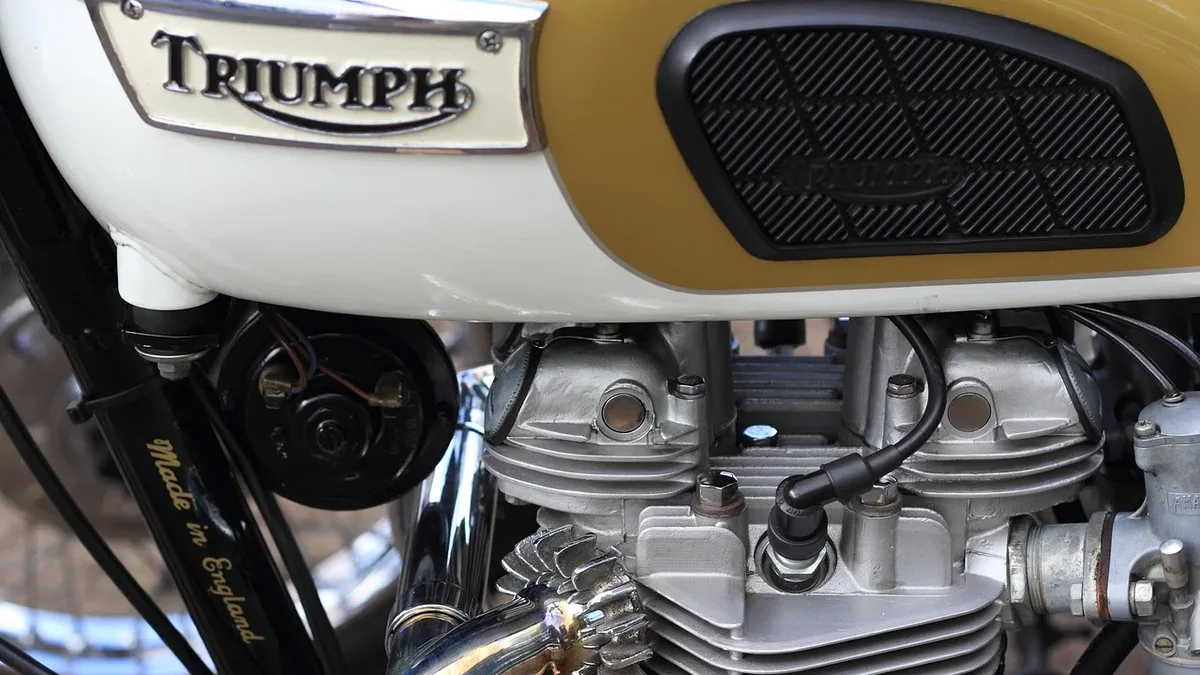
A writer has finally acquired a 1966 US-spec Triumph Bonneville T120 after a 21-year search. The motorcycle, a flood-damaged machine from New York, is now undergoing a full restoration.
The author's desire for the specific model was sparked in 2005 after riding two pristine examples owned by Hertfordshire-based Triumph restorer Hugh Brown. He was particularly taken with the 1966 model's aesthetic details, namely the red viper stripe on the white fuel tank and the light grey handlebar grips. While many consider the 1968-70 models the pinnacle, the writer's preference was purely emotional.
A Brief History of the Bonneville
The Triumph Bonneville was launched for the 1959 model year, named after Johnny Allen's 1956 speed record on the Bonneville Salt Flats. The initial model was essentially a Tiger 110 with a performance kit fitted as standard. Its early single front downtube frame was considered marginal for the bike's claimed 47bhp output.
Significant improvements arrived in 1960 with a new twin front downtube frame and the removal of the front nacelle. The model transitioned to unit-construction engines for all 650cc models in 1963, beginning what many regard as its golden years. Throughout the 1960s, the Bonneville was distinguished by its carefully chosen color schemes, which helped cement its status as a glamour model of the British motorcycle industry.
The report lists the annual two-tone color schemes for the unit-construction Bonneville from 1964 to 1970.
| Year | Color Scheme |
|---|---|
| 1964 | Gold and cream |
| 1965 | Pacific blue and silver |
| 1966 | Grenadier red and Alaskan White |
| 1967 | Aubergine and gold/Alaskan White |
| 1968 | Hi-Fi scarlet and silver |
| 1969 | Olympic Flame and silver |
| 1970 | Astral red and silver |
A major redesign in 1971 introduced an oil-in-frame chassis, leading eventually to the 744cc T140 model. The article notes that the modern Bonneville, launched in 2000, has now been in production longer than the original Meriden-built machines.
The Flood-Damaged Project
The writer's specific project bike has a dramatic history. It was originally owned by New York-based collector Jack Miller, who purchased it from its first owner around 1986. Miller had the fuel tank repainted in aircraft black and fitted later carburetors, using the bike sporadically until it reached 9,500 miles.
After an injury stopped Miller from riding, he refused to sell it. The situation changed when Hurricane Sandy hit New York in 2012. The Bonneville was submerged in floodwater, along with other vehicles in Miller's collection. Following the flood, Miller agreed to sell the damaged motorcycle to the writer's friend, Jim Patten.
Patten described the bike as looking "an absolute shed" upon arrival, with both wheels ruined. A stripdown, however, revealed surprisingly good condition underneath the surface damage. The frame was nearly pristine, requiring only a wipe down, though it was sent for painting alongside other tinware.
The Restoration Process
The engine suffered from seized pistons, which had to be carefully removed. The barrels were bored out to +020 and fitted with new pistons by Thurstons. The cylinder head was refurbished by Peter Trent with new guides, seats, and valves. Chris Applebee balanced the crankshaft.
Mechanically, the bike is fully dismantled with machining work completed. The writer sourced a complete set of new old stock gears and selectors after spotting blemishes on the originals. New bearings were purchased from Essex Bearings. The build will use new aftermarket stanchions, rear shocks, and handlebars.
While the front and rear fenders are in good but imperfect condition, one compromise was made. The writer intended to reuse the original wiring use but found it was too degraded after its saltwater immersion. A new use will be fitted instead. The fuel tank is currently with the painter, CL Classics, who is applying the correct 1966 Grenadier red stripes over an Alaskan White base.
The project remains a work in progress, a tangible result of a two-decade-long pursuit.