Dymag's Carbon Wheel Revival
British wheel manufacturer Dymag has resumed production of carbon motorcycle wheels using a new manufacturing technique.
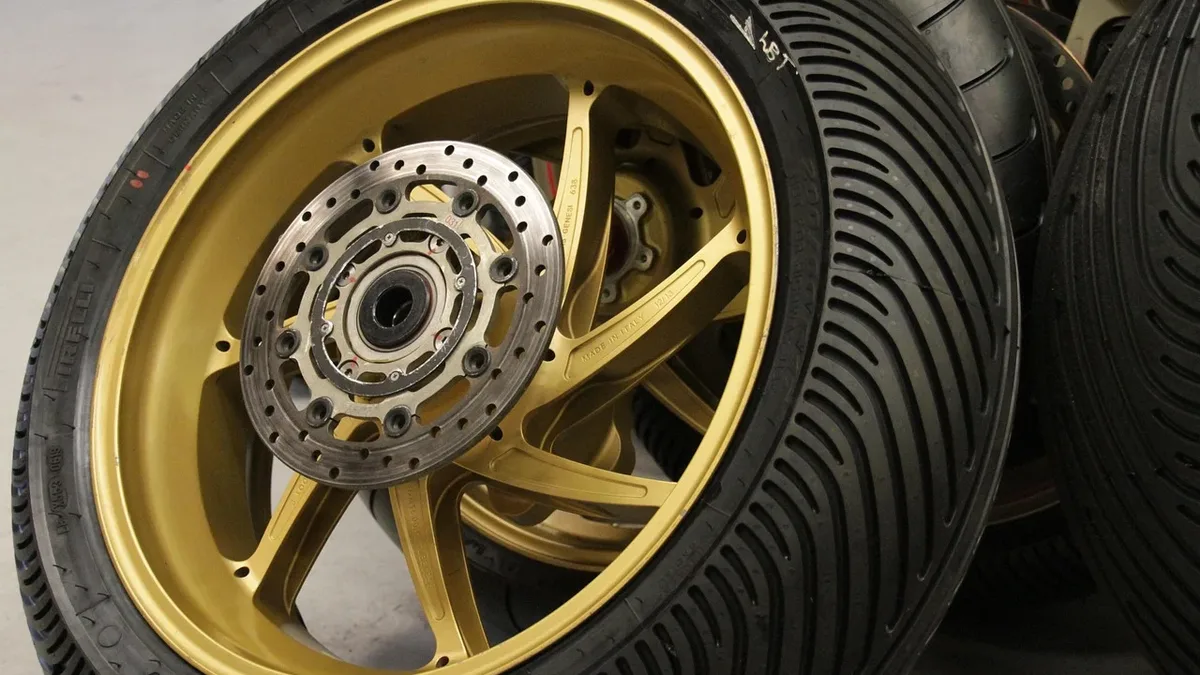
British wheel manufacturer Dymag is making carbon motorcycle wheels again after a pause. The company is the sole supplier to the Bathams AJN Racing team in the 2025 British Superbike championship, fitting custom gold wheels to Storm Stacey's bike.
According to a report from MoreBikes, the new wheels are produced using a completely different method compared to Dymag's original carbon offerings. The original process, used until production halted around the Covid pandemic, was known as the CA5. The new wheels are called the CA5 Evo.
From Magnesium to Carbon
The company's name is derived from 'Diecast Magnesium'. Founder Max Bostrom first produced magnesium wheels in 1974, a time when most motorcycle wheels were still spoked. These were significantly stronger and lighter than contemporary options.
Dymag won its first motorcycle championship in 1981, taking the AMA Superbike title with Eddie Lawson. Success in Grand Prix racing followed in 1984. The company also supplied wheels to Formula 1, with Nigel Mansell winning the 1985 world championship in a Williams car on Dymag wheels.
The switch from magnesium to alloy was forced in the late 1980s when Dymag's foundry closed. The company then developed a unique bonding technique for its alloy wheels. The hub is bonded to the rim with an aerospace-grade adhesive so strong that separation would require heating to 200 degrees Celsius and a three-ton press.
A New Manufacturing Era
The original carbon wheels were made using a 'wet lay' technique, where sheets of carbon fibre were manually dabbed with resin. Those wheels had a Glass Transition Temperature (Tg) of 120 degrees Celsius.
The new CA5 Evo wheels are made via Resin Transfer Moulding (RTM). This process infuses resin into dry carbon fibre sheets within a sealed mould under vacuum. The wheel is then baked twice. The new technique yields a Tg of 190 degrees Celsius.
Dymag's testing has also evolved. Early carbon wheels in the 1990s were tested secretly on a race bike, painted white to hide their material. The new CA5 Evo wheel has passed a brutal drop test, surviving a 470kg impact without cracking or delamination. This makes it stronger than the company's own forged alloy wheels.
The Hub of the Matter
Dymag's manufacturing cleverness lies in its hub-centric design. All rims are 17 inches in diameter, with widths varying by application. The company holds a stock of about 300 forged alloy rims for quick order turnaround.
The bespoke hub is the part specific to each motorcycle model. Dymag manufactures these hubs in-house and bonds them to the rim. This design means all hub data is transferable to the new carbon wheels. The company simply bonds the relevant hub into either a forged alloy rim or the new carbon rim, depending on the order.
Company veteran Mike Wilson explained the history during a factory tour in Chippenham. Dymag's focus for wheel development is driven by advances in tyre performance, not just bike performance. As tyres sustain higher loads, the wheels must keep pace. The Bathams AJN Racing team's curiosity about the British brand led to their partnership and the distinctive gold wheels on the BSB grid.