Kawasaki
| Manufacturer | Kawasaki Heavy Industries, Ltd. |
|---|---|
| Country of origin | Japan |
| First created | 1960s |
| Original use | Motorcycle production |
| Engine configuration | Typically inline-four |
| Drive | Chain drive |
| Frame material | Steel or aluminum alloy |
Origin and history
Kawasaki's origins as a motorcycle manufacturer are rooted in post-war Japan during the late 1950s. The company itself, Kawasaki Heavy Industries, was founded in the late 19th century as a shipbuilder, diversifying into aerospace and rolling stock. Its entry into motorcycle production began with the acquisition of the Meguro Manufacturing Company, a respected Japanese motorcycle maker, in the early 1960s. This acquisition provided Kawasaki with immediate engineering expertise and a prototype for its first major motorcycle, the Kawasaki W1. The brand's early identity was heavily influenced by its aerospace division, leading to a focus on technical innovation and high-performance engineering. This industrial heritage set Kawasaki on a distinct path from its Japanese competitors, emphasizing power and advanced technology from the outset.
What it is designed for
Kawasaki motorcycles are engineered across a spectrum of disciplines, each model designed for a specific riding craft and environment. Sport bikes, like the Ninja series, are designed for high-speed pavement performance, prioritizing aerodynamic efficiency, precise cornering, and maximum power delivery. Dual-sport and adventure models, such as the KLR and Versys lines, are designed for mixed-surface travel, balancing on-road comfort with off-road durability and suspension travel. Cruisers, under the Vulcan name, are designed for relaxed highway cruising, featuring low seat heights, torquey engines, and a classic aesthetic. The Z series of naked bikes is designed for agile urban performance and backroad riding, offering upright ergonomics and accessible power without full sport-bike fairings. Ultimately, each Kawasaki is designed to deliver a specific riding experience, tying the machine's purpose directly to the rider's chosen craft.
Development and versions
Development within a Kawasaki model line typically follows a pattern of incremental refinement punctuated by significant generational leaps. The Ninja sport bike lineage, for example, evolved from air-cooled four-cylinders in the 1980s to today's liquid-cooled, electronics-laden supersport and hyperbike platforms. The company has developed distinct engine families, like the parallel-twin platform that now powers models from the Ninja 650 to the Versys 650, demonstrating a strategy of shared, versatile architecture. Major version updates often introduce new chassis geometry, electronic rider aids such as traction control and selectable power modes, and revised styling. Some models, like the KLR650, saw remarkably long production runs with minimal changes, becoming legends for their simplicity, while others, like the H2, represent radical development pushes into supercharged performance.
Kawasaki price
Kawasaki's pricing strategy positions it as a competitor offering strong performance and technology for the price within the motorcycle market. Entry-level models, such as the Kawasaki Z400 or Ninja 400, are typically priced aggressively to attract new riders, offering a lower financial barrier to a full-size motorcycle. Mid-range models, including the Versys 650 or Ninja 650, occupy a competitive price point in their respective categories, often undercutting comparable European offerings. The premium end of the spectrum, featuring liter-class sport bikes like the Ninja ZX-10R and exotic models like the supercharged Ninja H2, commands pricing that reflects their advanced engineering and components. Overall, Kawasaki pricing is generally viewed as providing good value, particularly in the beginner and middleweight segments.
Kawasaki specs
Specifications are a core part of Kawasaki's identity, often highlighting high horsepower figures and technological features. Engine specifications range from small-displacement 125cc singles to a 998cc inline-four in the Ninja ZX-10R, and the 998cc supercharged inline-four in the H2 model. Power outputs are famously high, with liter-class sport bikes producing horsepower figures competitive in the superbike class, while torque characteristics are tuned to suit each model's purpose. Chassis specs typically include a steel trellis or perimeter frame for naked and sport bikes, with aluminum frames reserved for top-tier supersport models. Suspension components progress from basic non-adjustable units on entry bikes to fully adjustable inverted forks and shock absorbers on performance models. Electronic specification now commonly includes ABS, multiple riding modes, Kawasaki Traction Control (KTRC), and on premium models, launch control and electronic suspension.
Best Kawasaki
Declaring a single "best" Kawasaki is impossible, as it is entirely dependent on the rider's intended craft and priorities. For a rider seeking the ultimate in track-focused performance and technology, the Ninja ZX-10R is arguably the brand's pinnacle sport bike. For long-distance adventure touring with off-road capability, the KLR650 is renowned as a durable, simple, and capable workhorse, while the Versys 1000 offers more road-biased comfort and power. In the realm of accessible, all-around street performance, the Z900 naked bike is frequently cited for its potent engine, agile chassis, and relative value. For a beginner, the Ninja 400 is widely considered one of the best first sport bikes due to its forgiving nature, light weight, and sufficient performance. The supercharged Ninja H2 represents the best of Kawasaki's engineering audacity and outright, extreme performance, though its usability is highly specialized.
Kawasaki reviews
Professional reviews consistently praise Kawasaki motorcycles for their strong engines, sharp handling, and overall value proposition. Critics often highlight the visceral, linear power delivery of Kawasaki's inline-four engines, particularly in the ZX and Z series, as a defining and positive characteristic. The ergonomics of sport models are frequently noted as being more accommodating for street use than some European rivals, striking a balance between performance and comfort. Common points of criticism in reviews include suspension components on mid-range models, which can be described as basic or under-damped for aggressive riding, and overall finish details that may not match the premium feel of more expensive brands. Adventure models like the Versys are reviewed as competent, comfortable road tourers, though sometimes noted as being less off-road capable than dedicated competition. The overarching theme in reviews is that Kawasaki delivers robust, performance-oriented machines that meet their design brief effectively, if sometimes with a focus on function over finesse.
Pros and cons
A significant pro for Kawasaki is its widespread reputation for reliable, overbuilt engines that can withstand hard use and high mileage with proper maintenance. The brand also offers a very wide model range, ensuring most riders can find a machine suited to their specific craft, from touring to track riding. A common con is that some models, particularly in the middleweight segment, can feel dated in terms of technology or component quality compared to annually updated competitors. Owners sometimes regret choosing a high-performance Kawasaki sport bike as a first motorcycle, finding the power intimidating and the insurance costs prohibitively high. The common mistake is purchasing a motorcycle based solely on peak horsepower specs without considering the riding position, real-world usability, or cost of ownership, leading to discomfort or financial strain. Another genuine drawback can be dealer support and parts availability, which, while generally good, can be inconsistent in some regions compared to other Japanese manufacturers.
Who it suits
Kawasaki suits riders who prioritize accessible performance and proven mechanical durability over boutique prestige or the latest electronic gadgets. The brand is an excellent fit for new riders starting on a Ninja 400 or Z400, as these models offer a manageable introduction to sport-oriented riding. Performance-oriented street riders and track day enthusiasts are well-suited to the Ninja ZX-6R and ZX-10R, which deliver top-tier speed and handling for those with the skill to use them. Practical adventurers and commuters seeking a dependable, versatile machine find a match in the Versys or KLR lines, which emphasize function and longevity. Ultimately, Kawasaki suits the rider who views a motorcycle as a tool for a specific craft, whether that craft is cornering, touring, or commuting, and values robustness and direct performance feedback.
Latest Kawasaki news
Latest reporting
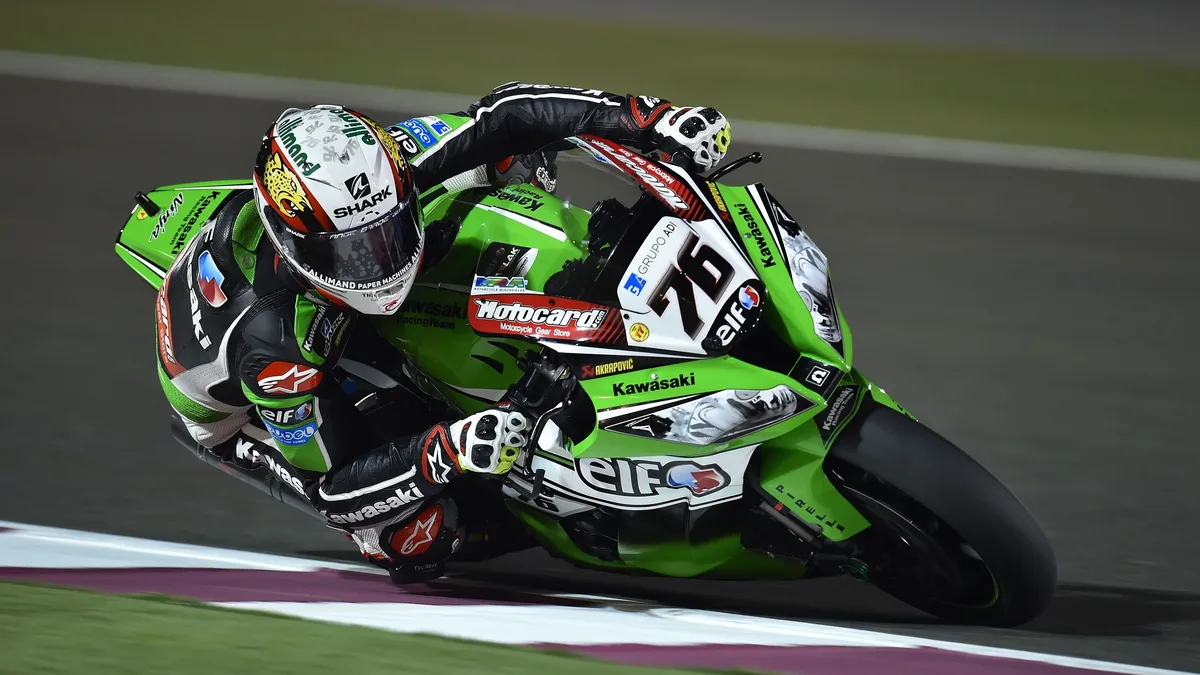
Kawasaki UK Announces New Motorcycle Offers and Promotions
Kawasaki UK has launched a series of new rider promotions and finance offers across its 2025 and 2026 model ranges, including track day packages...
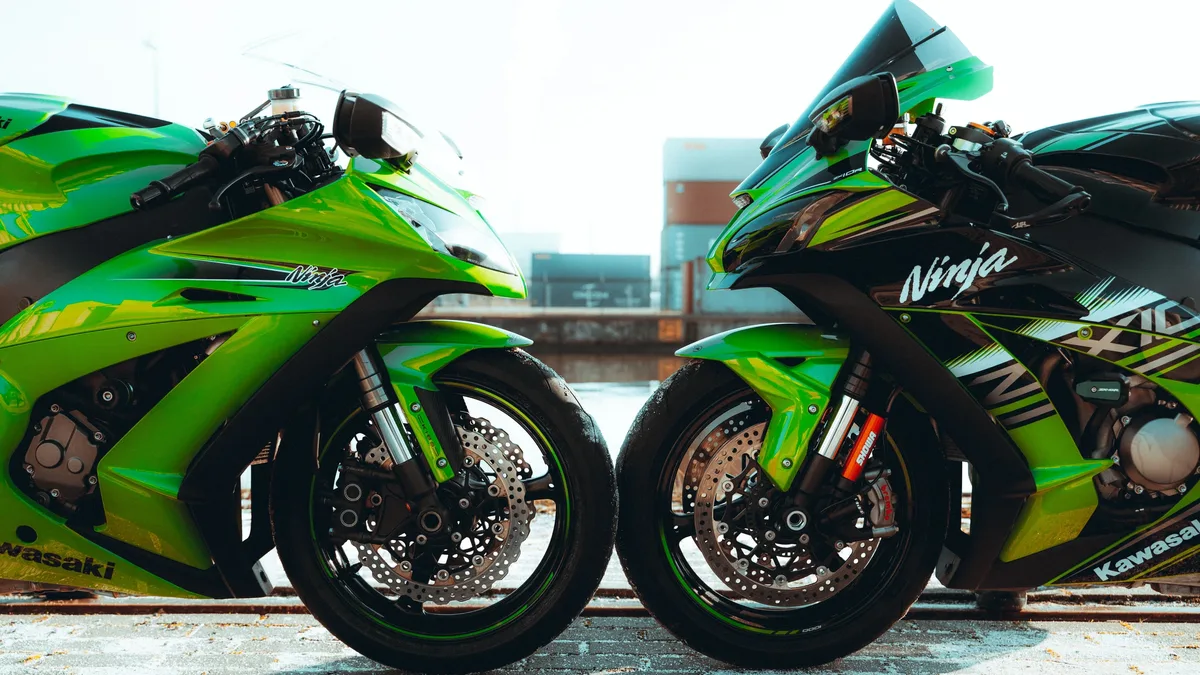
Kawasaki Ninja 1100SX, Versys 1100 for 2027
Kawasaki has detailed new colour options for its 2027 Ninja 1100SX and Versys 1100 models, continuing a gentle refresh of its big-bike line-up with no
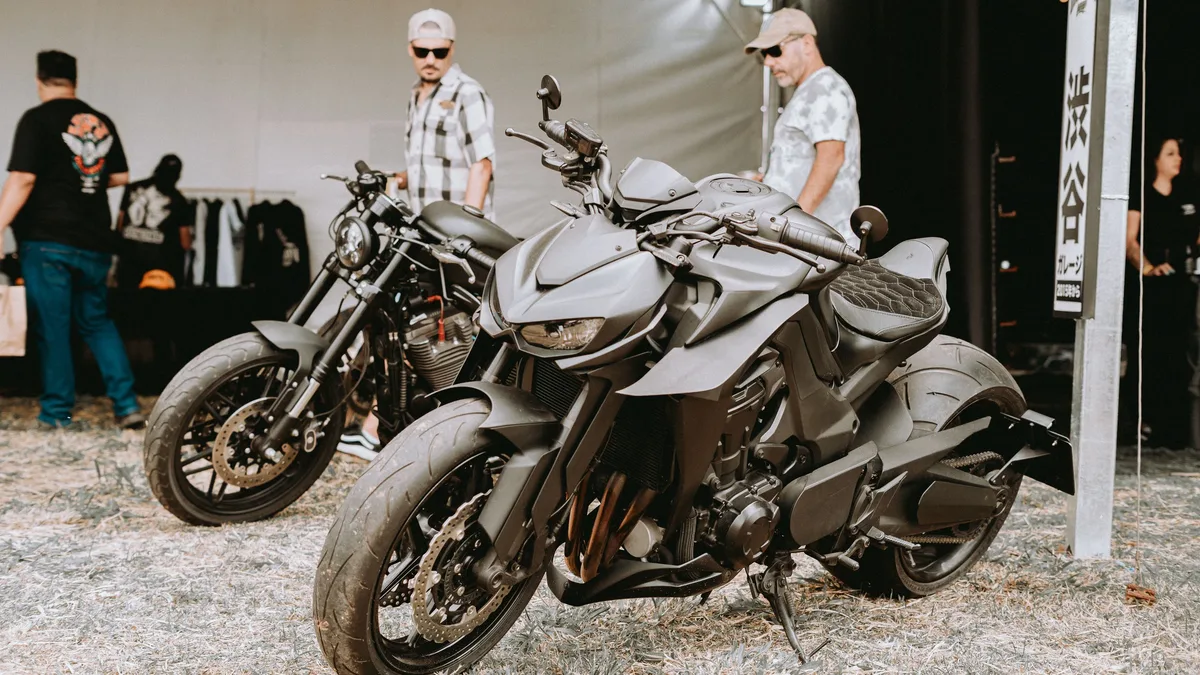
Stunt Rider Rick English Reveals Favourite Kawasaki Bike
Legendary stunt rider Rick English shares his go-to Kawasaki motorcycle for stunt scenes and discusses his favourite type of movie stunt
MCL26 Sets Stage for All-New Modern Classic Motorcycle Display
MCL26, a motorcycle event in Birmingham, will feature a carefully selected collection of 12 classic motorcycles, including a Kawasaki GPZ750 Turbo...
Kawasaki Corleo Patents Reveal New Details of Hydrogen-Powered Horse-Like Motorcycle
Kawasaki's Corleo concept, a hydrogen-powered motorcycle with four legs and a head, has revealed new details through a patent. The machine will use a...