
Honda
| Manufacturer | Honda Motor Co., Ltd. |
|---|---|
| Original use | On-road and off-road motorcycle riding. |
| Engine configuration | Typically a four-stroke, single-cylinder or parallel-twin. |
| Drive | Chain final drive. |
| Suspension type | Front telescopic fork, rear swingarm with monoshock or dual shocks. |
| Brake type | Hydraulic disc brakes (front and rear). |
| Fuel system | Electronic fuel injection (EFI). |
Origin and history
Honda is a Japanese multinational corporation primarily known for manufacturing automobiles, motorcycles, and power equipment. The company was founded in the late 1940s by Soichiro Honda, initially focusing on the production of motorized bicycles. These early creations involved fitting small, surplus wartime generator engines to conventional bicycle frames, providing affordable personal transportation in post-war Japan. The official establishment of the Honda Motor Co., Ltd. occurred in the late 1940s, marking the beginning of its formal corporate history. The company's first complete motorcycle, the Dream D-Type, was introduced in the early 1950s, embodying Soichiro Honda's engineering philosophy. This foundational period established Honda's core principles of innovative engineering, reliability, and mass production techniques that would define its global expansion.
What it is designed for
Honda motorcycles are engineered to provide reliable, efficient, and accessible transportation for a vast spectrum of riders. The design philosophy prioritizes functional engineering, user-friendly operation, and mechanical durability across diverse riding disciplines. For commuters and new riders, models are designed for ease of use, with predictable handling, manageable power, and low maintenance requirements. For touring enthusiasts, specific models are designed with comfort, weather protection, and long-distance capability as primary objectives. In the realm of off-road and dual-sport riding, Honda designs motorcycles for lightweight agility, suspension travel, and mechanical resilience in challenging terrain. The overarching design goal is to deliver practical mobility solutions that balance performance, affordability, and proven reliability for everyday use and recreation.
Development and versions
Honda's development strategy is characterized by continuous incremental improvement and the creation of distinct model families for specific market segments. The company pioneered technological advancements such as the overhead camshaft engine in mass-produced motorcycles and the transverse, in-line four-cylinder engine layout that became an industry standard. Model families like the CB series for standard street bikes, the CRF series for off-road and dual-sport, the Gold Wing for luxury touring, and the CBR series for sport riding have each evolved over decades. Development often involves creating multiple displacement versions within a platform, such as offering a model in 300cc, 500cc, and 750cc variants to suit different licensing tiers and performance needs. Honda also practices global model differentiation, where versions of a motorcycle may have different specifications or equipment levels tailored for regional markets and regulations. This systematic approach to platforms and versions allows for economies of scale while catering to a wide array of rider preferences and legal requirements.
Honda price
Honda motorcycle pricing is structured to position its models as strong values within their respective categories, typically undercutting premium European rivals while often commanding a slight premium over some budget-oriented competitors. Entry-level models, such as small-displacement scooters and beginner-friendly motorcycles, are priced accessibly to attract new riders and serve as practical urban transport. Mid-range models, encompassing popular standard, cruiser, and adventure-touring bikes, occupy a competitive price point that emphasizes a balance of features, performance, and running costs. Flagship models, like the full-dress Gold Wing or high-performance CBR1000RR, carry prices that reflect their advanced technology, extensive equipment, and niche market positioning. It is essential to note that the Manufacturer's Suggested Retail Price (MSRP) does not include destination charges, tax, title, or dealer fees, which can add a significant amount to the final out-the-door cost. Used market values for Honda motorcycles are generally strong due to the brand's reputation for reliability, making them a common recommendation for first-time used bike buyers.
Honda specs
Specifications for Honda motorcycles vary dramatically across model lines but consistently highlight engineering priorities of efficiency, controllability, and maintenance simplicity. Engine configurations are diverse, including single-cylinder, parallel-twin, V-twin, inline-triple, and inline-four cylinder layouts, with displacement ranging from 50cc to over 1800cc. Power delivery is typically tuned for broad, usable torque curves rather than peak horsepower figures, especially on models designed for general use. Chassis geometry tends toward stable, neutral handling characteristics, with rake and trail figures that promote confidence for a wide skill level. Weight figures are competitive within each class, though Honda models are seldom the absolute lightest, as durability and feature content are often prioritized over radical weight reduction. Standard equipment on modern models frequently includes technologies like selectable torque control (traction control), anti-lock braking systems (ABS), and LED lighting, though exact specifications are always model-year and market dependent.
Overview
Honda is a dominant force in global motorcycling, producing a broader range of motorcycles than any other manufacturer, from small-displacement commuters to flagship tourers. The brand's identity is built on a foundation of pragmatic engineering, proven reliability, and widespread dealer network support, rather than on exotic materials or extreme performance claims. This results in motorcycles that are consistently competent, easy to live with, and cost-effective to own over the long term. The riding experience across most models is characterized by smooth power delivery, intuitive controls, and a general sense of mechanical refinement that minimizes vibration and harshness. For many riders, a Honda represents a rational, low-regret choice that competently fulfills its intended role without excessive drama or demanding maintenance schedules. The vast model lineup ensures there is almost always a Honda motorcycle engineered for a specific riding purpose, making the brand a default starting point for many shoppers.
What to know
While build quality is generally good, some models may utilize more cost-effective components in areas like suspension or brakes to meet price targets, which can be a point of aftermarket upgrade. The widespread availability of models means used parts are plentiful and independent mechanics are typically very familiar with their service procedures, aiding long-term ownership costs. Honda's dealer network is extensive, but the sales and service experience can vary significantly from one dealership to another, so researching local dealer reputation is advisable. For riders seeking a highly emotional or characterful machine, some Honda models can be perceived as competent but bland compared to competitors with more distinct personalities or historical pedigree. It is crucial to evaluate a specific model for its intended use, as a Honda designed for one purpose, like road touring, may be ill-suited for another, like aggressive off-road riding, despite the brand's overall reputation.
Common questions
A common question is whether Honda motorcycles are good for beginner riders, to which the answer is often yes due to the availability of manageable, low-power models with forgiving ergonomics and controls. People frequently ask about the reliability of specific models, with general consensus being that Hondas are among the most dependable motorcycles, though individual model years or specific components may have known issues worth researching. Many inquire about the difference between Honda's various model prefixes, such as CB, CBR, CRF, and CMX, which designate the motorcycle's riding category, like standard, sport, off-road/dual-sport, and cruiser, respectively. Riders often question the real-world fuel economy of Honda motorcycles, which is typically excellent for smaller displacements and respectable for larger ones, though riding style and conditions are always major factors. A recurring question concerns the value of optional equipment packages, which usually include combinations of luggage, comfort accessories, and electronic aids that can be more cost-effective when bundled at purchase. Potential buyers also commonly ask how a particular Honda model compares to a direct competitor from brands like Yamaha, Kawasaki, or Suzuki, requiring a detailed feature-by-feature and test-ride comparison.
Pros and cons
A significant pro is Honda's renowned reliability and low cost of ownership, leading to high resale value and peace of mind for owners who prioritize dependability over excitement. The cons include a perceived lack of character or emotional appeal in some models, which can feel too sanitized or focused on mass-market appeal for riders seeking a machine with a distinct soul. Another pro is the vast, well-established global dealer and parts network, making repairs and maintenance straightforward almost anywhere. A common con is that, to meet specific price points, some models are equipped with budget-oriented suspension and brake components that can feel inadequate for more aggressive riding or heavier riders. The engineering focus on smooth, user-friendly power is a pro for daily commuting and new riders, but a con for enthusiasts who prefer more immediate, raw feedback and peaky performance from their engines. A frequent mistake is assuming all Hondas are created equal; a model designed for paved-road touring will disappoint in serious off-road use, despite the brand's strong dirt-bike heritage.
Who it suits
Honda motorcycles suit pragmatic riders who view their motorcycle primarily as a tool for transportation, recreation, or touring, valuing predictability and low maintenance above all else. They are an excellent match for new and returning riders who need a confidence-inspiring machine that is easy to control and unlikely to develop unexpected mechanical problems. Commuters and urban riders benefit immensely from Honda's efficient small-displacement models and scooters, which offer outstanding fuel economy and filtering agility with proven durability. Touring riders seeking comfort, weather protection, and gadgetry on a reliable platform will find suitable options, particularly in the Gold Wing and adventure-touring lines. However, Honda may not suit the rider whose primary motivation is owning a piece of motorcycle history, a hand-built exotic, or a machine that prioritizes raw, unfiltered performance and feedback over polished civility. The brand ultimately serves the broad center of the motorcycling market, appealing to those whose purchase decision is led more by the head than the heart.
Latest Honda news
Latest reporting
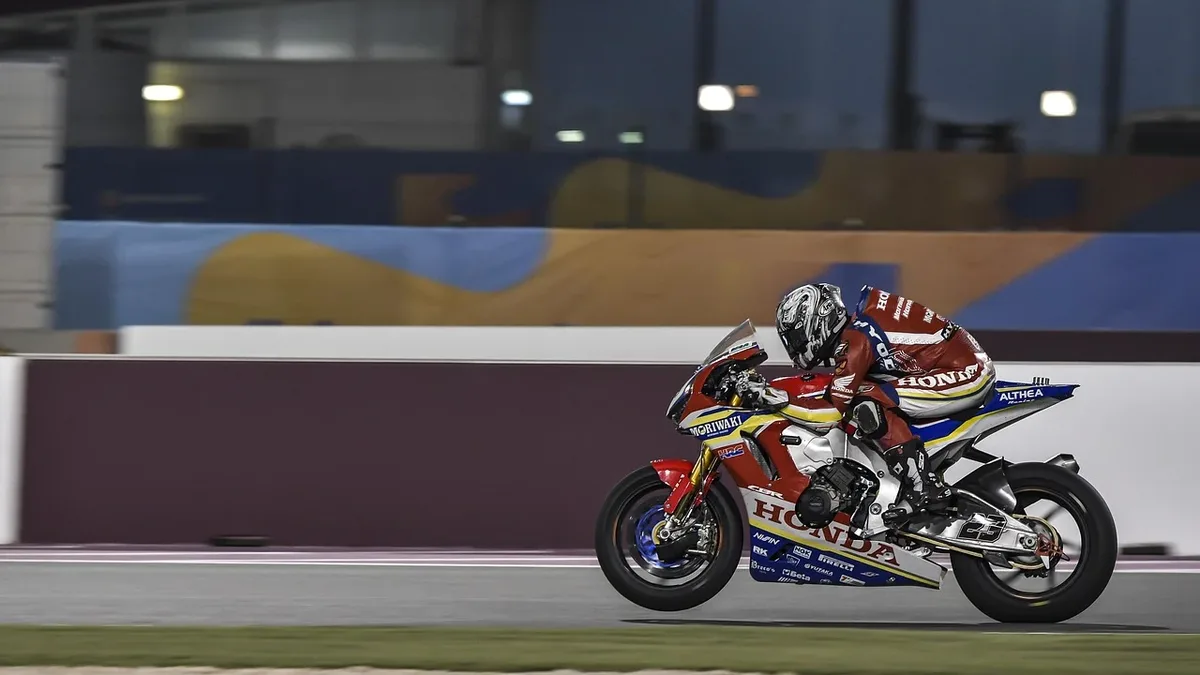
Honda confirms Red Bull's return as factory MotoGP sponsor
Honda has confirmed Red Bull will return as a sponsor of its factory MotoGP team from the 2027 season. The multi-year deal will see Fabio Quartararo...
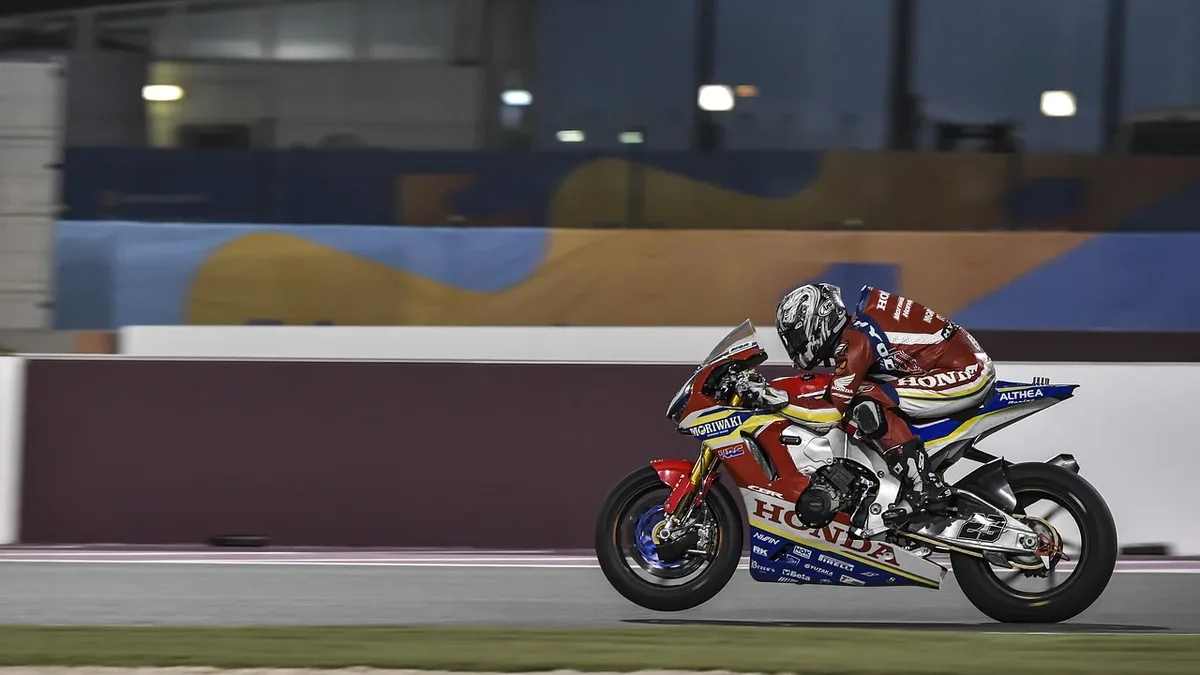
Red Bull Returns to Honda for 2027, Quartararo Forced
Red Bull will resume sponsoring Honda's factory MotoGP team from 2027, ending a four-year absence. The deal forces Fabio Quartararo, Honda's new...
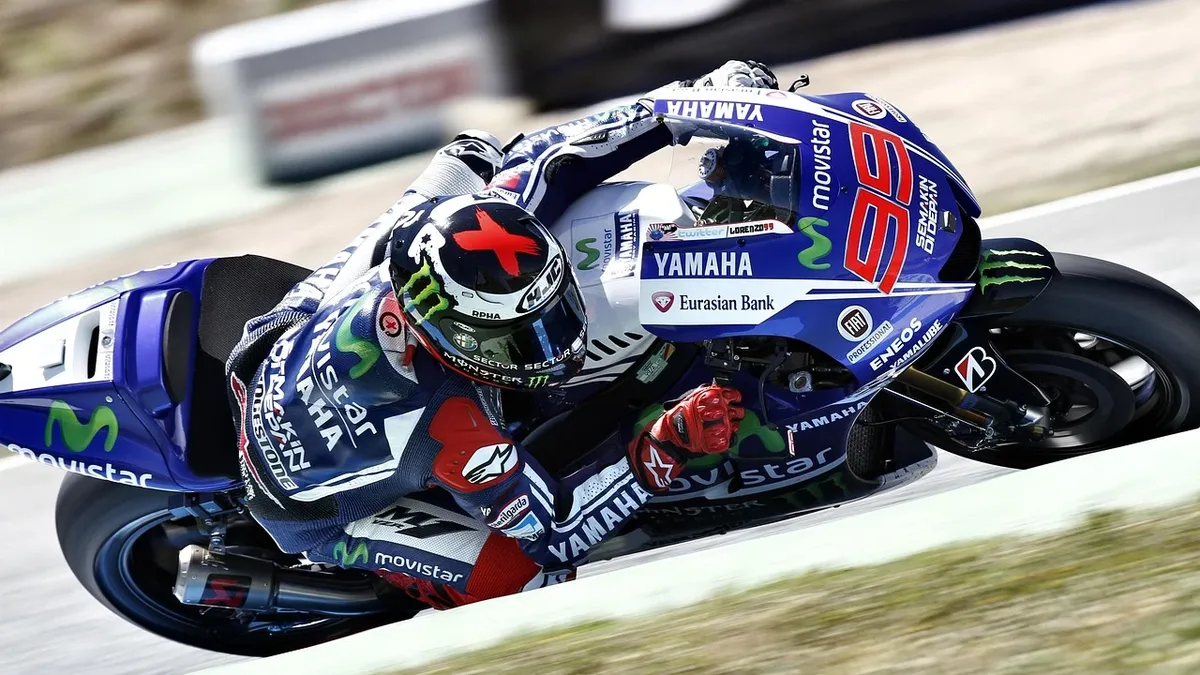
Luca Marini suffers chest pain after MotoGP
Honda rider Luca Marini was struck by a piece of bodywork, believed to be from Fabio Quartararo's Yamaha, during the Austrian MotoGP, causing...
Joey Dunlop and John McGuinness Vimto Honda TT bikes
Two historic Honda SP-1 motorcycles raced by TT legends Joey Dunlop and John McGuinness in 2000 will be auctioned in November 2026.
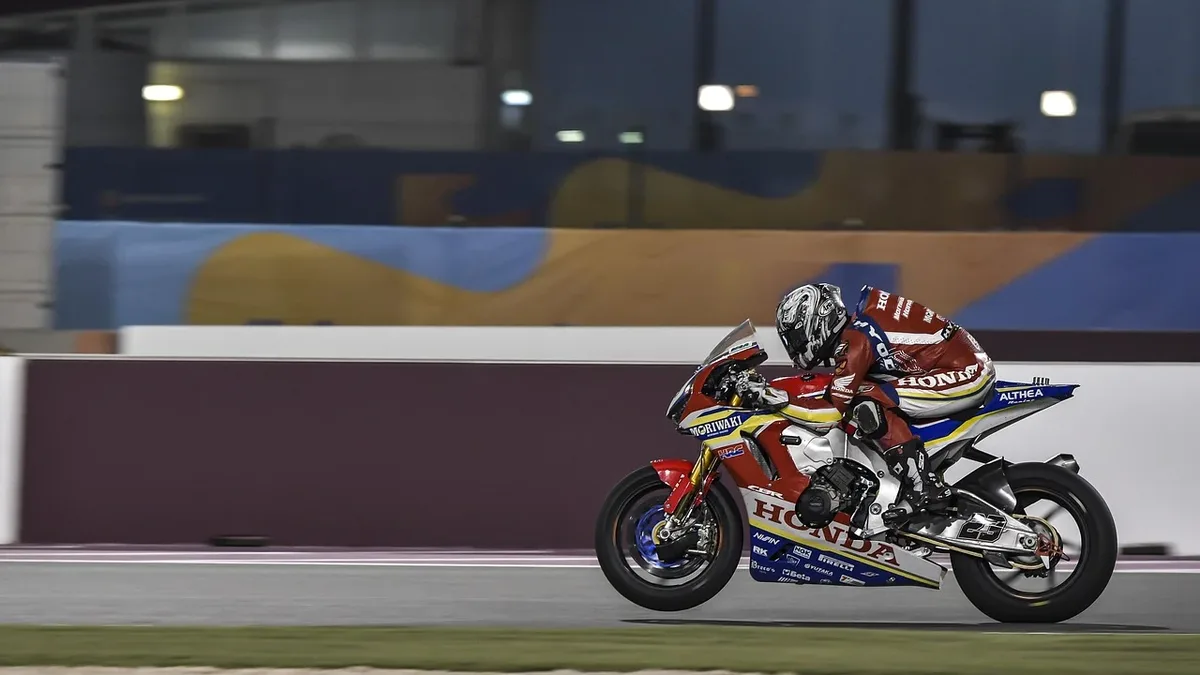
Joan Mir defends his high crash rate in MotoGP
Honda rider Joan Mir has defended his high number of crashes, attributing them to the risks needed to extract performance from a difficult bike.
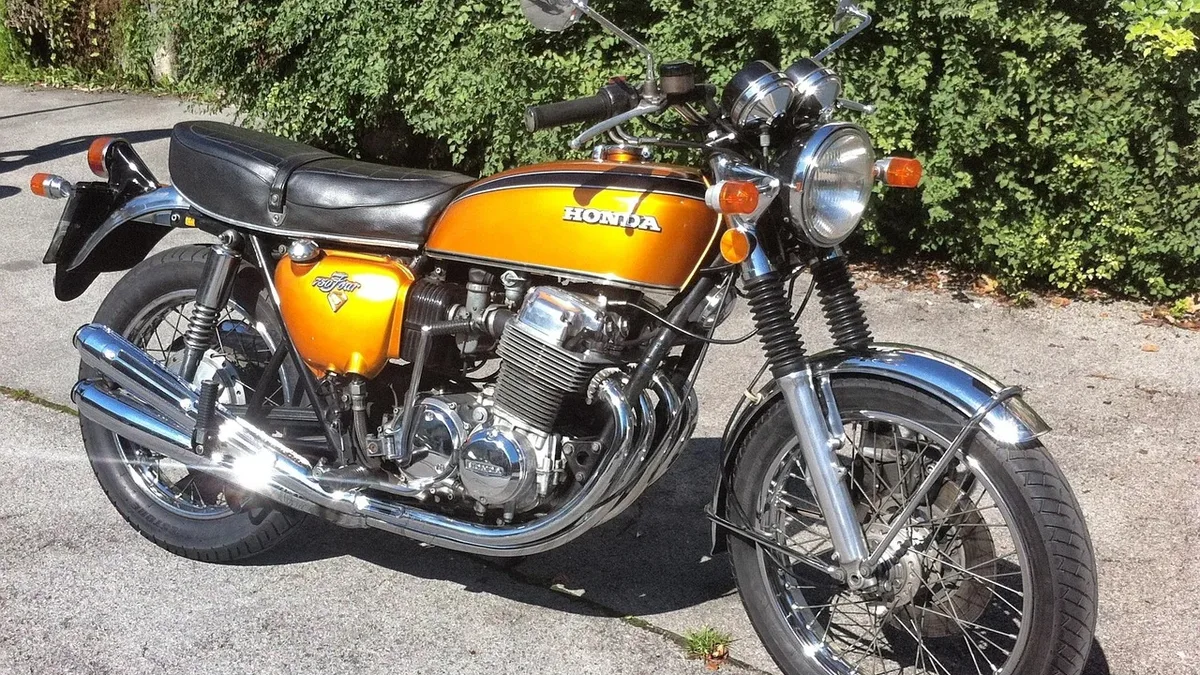
Cal Crutchlow backs Diogo Moreira for factory Honda MotoGP
Cal Crutchlow says choosing rookie Diogo Moreira over Moto2's David Alonso for Honda's 2027 factory seat is an 'absolute no-brainer'.